Enhancing Oil Recovery
Using Free Energy Calculations to Help Explain Low-Salinity Enhanced Oil Recovery
Thomas Underwood
www.dur.ac.uk/thomas.underwood
Thermodynamics 2015

Global Energy Demand
By the year 2035 it is predicted that worldwide energy consumption will have increased by approximately 35%.
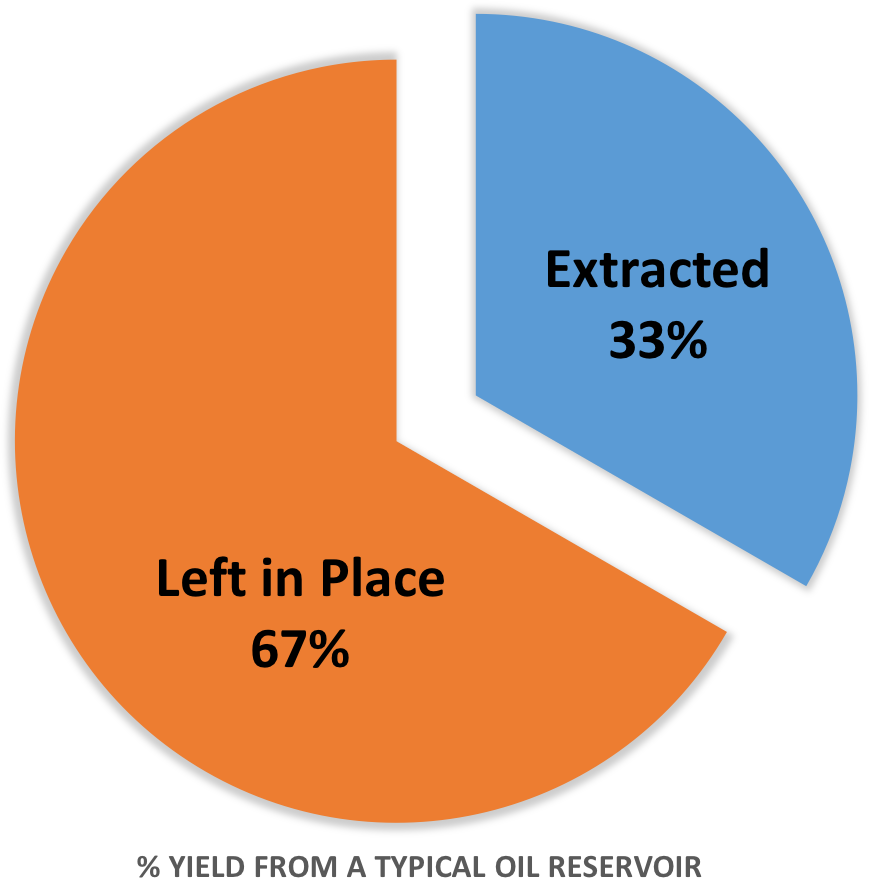
Current oil extraction methods only recover a third of the oil within a reservoir.
Optimising oil extraction rates is a big problem!
A Possible Solution...
Enhanced oil recovery (EOR) is a technique used to enhance the oil output from a reservoir.
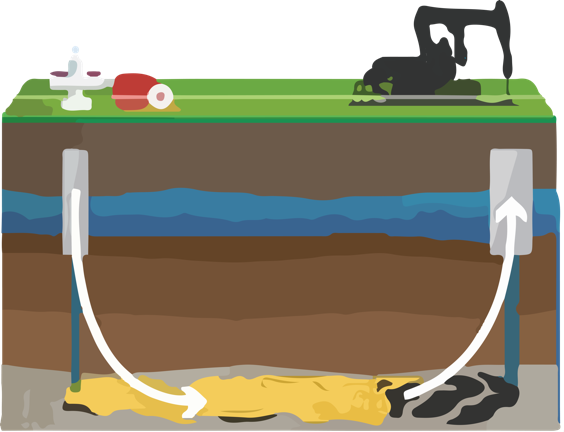
Using a flooding fluid with lower salinity (compared to seawater) has been shown to improve oil extraction rates, hence low-salinity EOR.
How we think it works...

How we think it works...
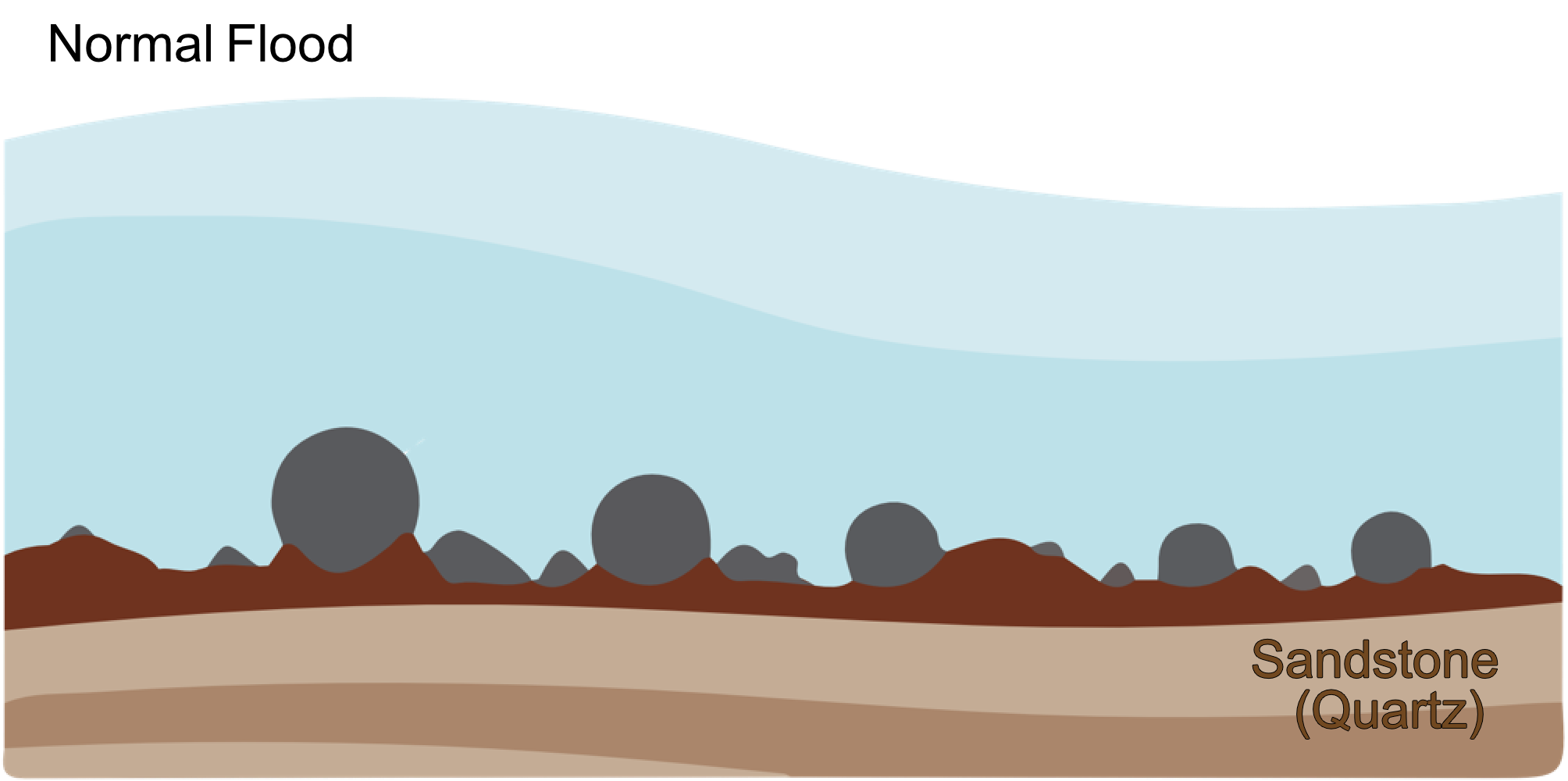
How we think it works...
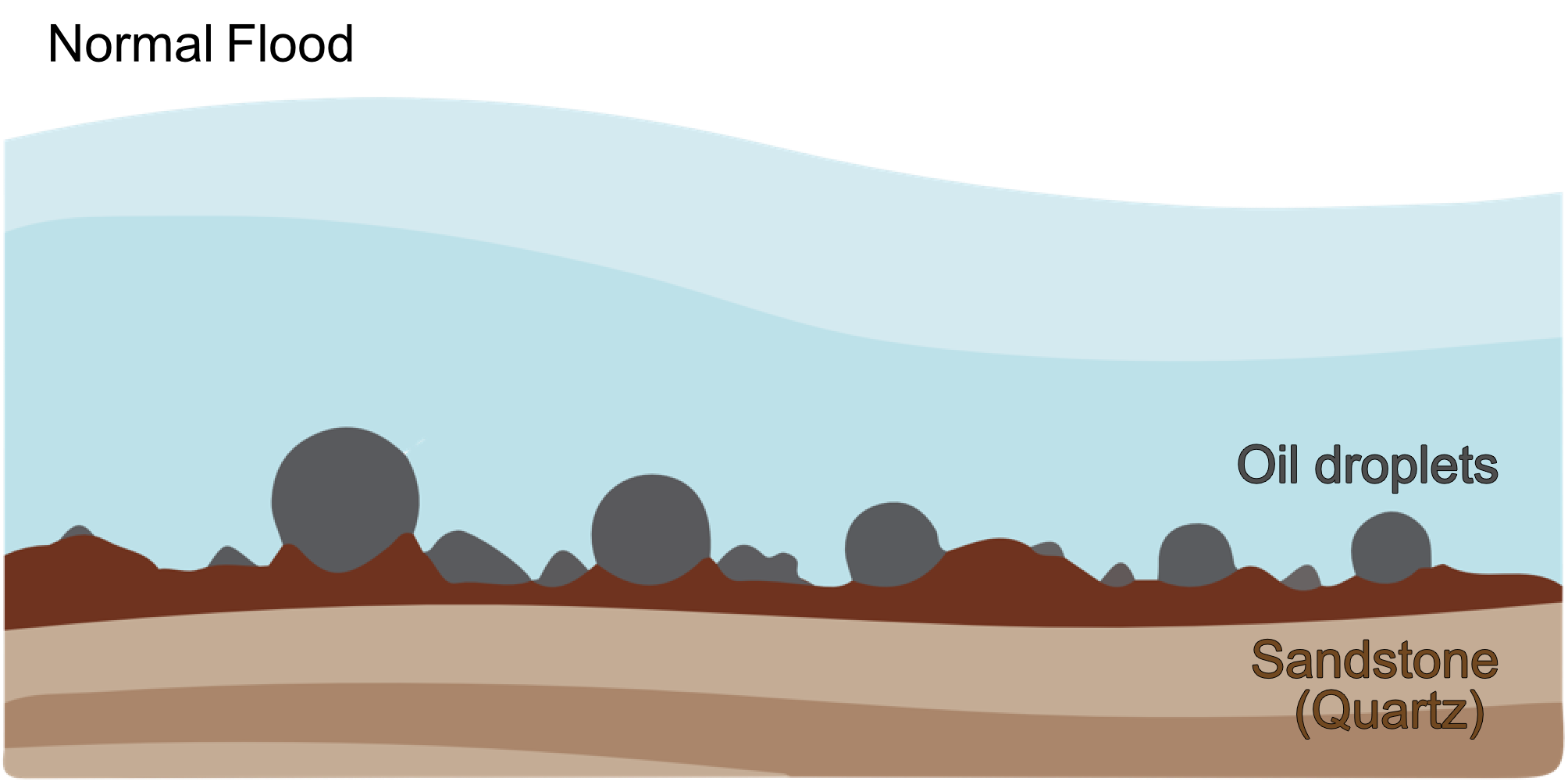
How we think it works...
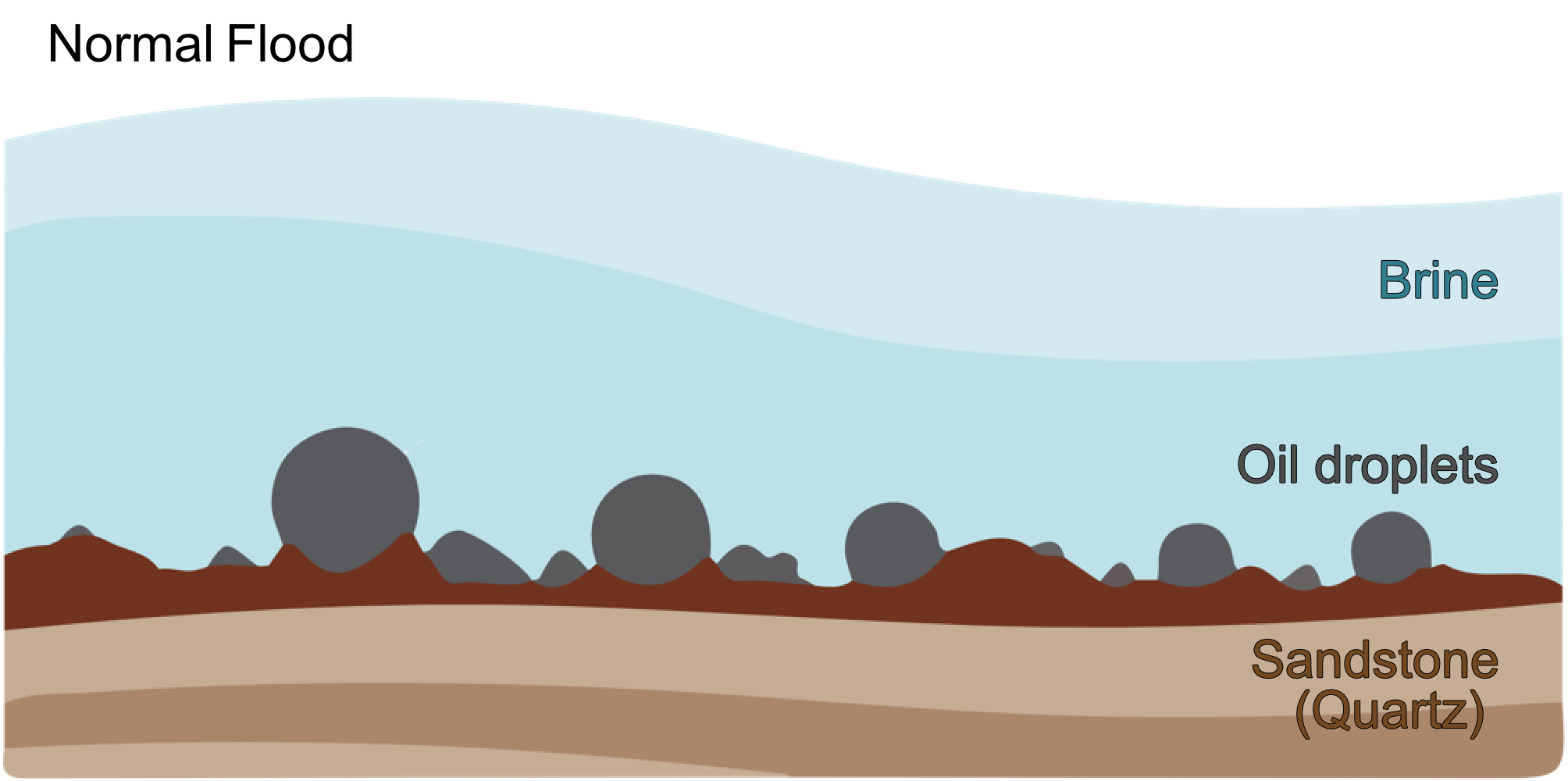
How we think it works...
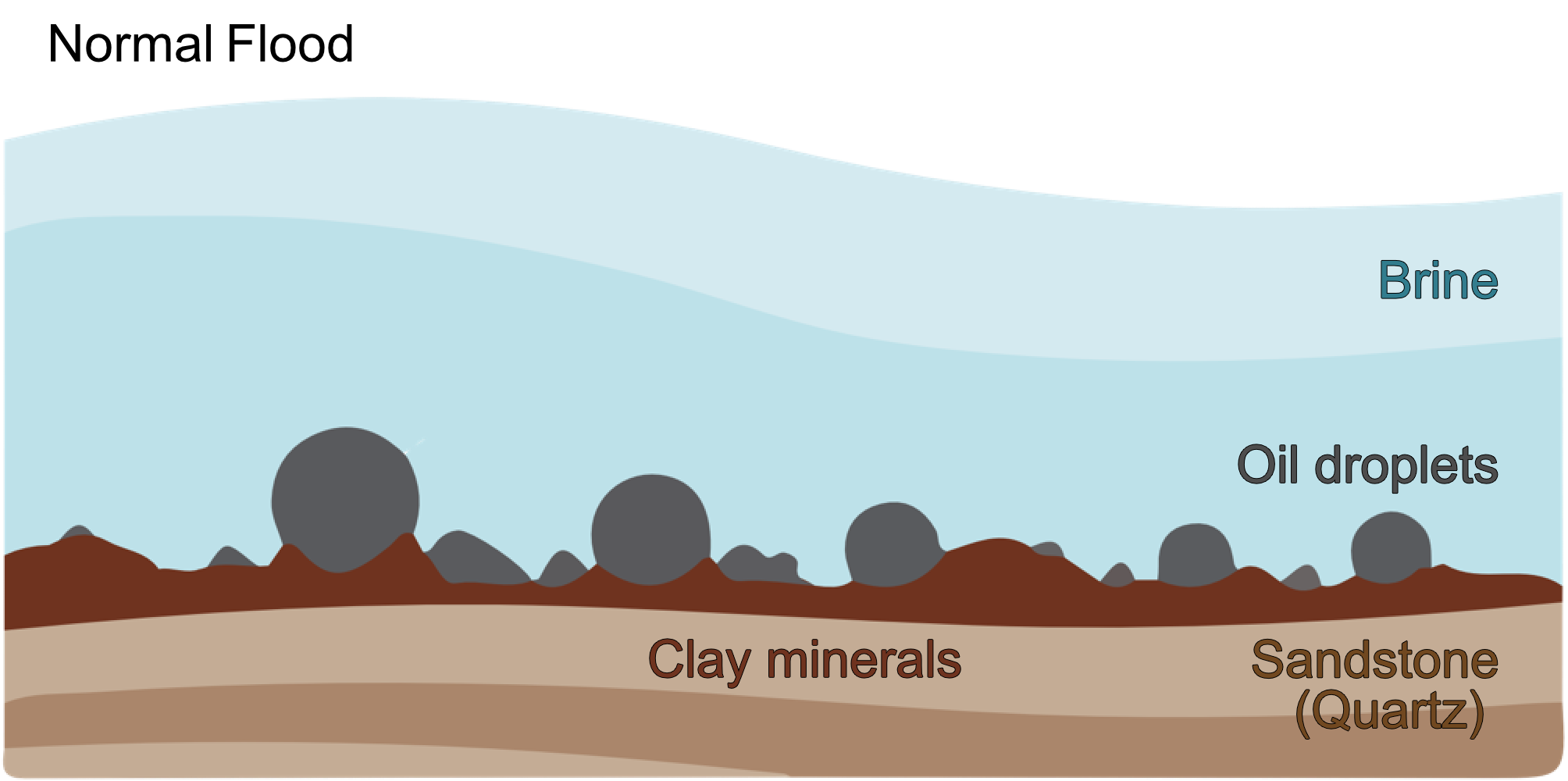
How we think it works...
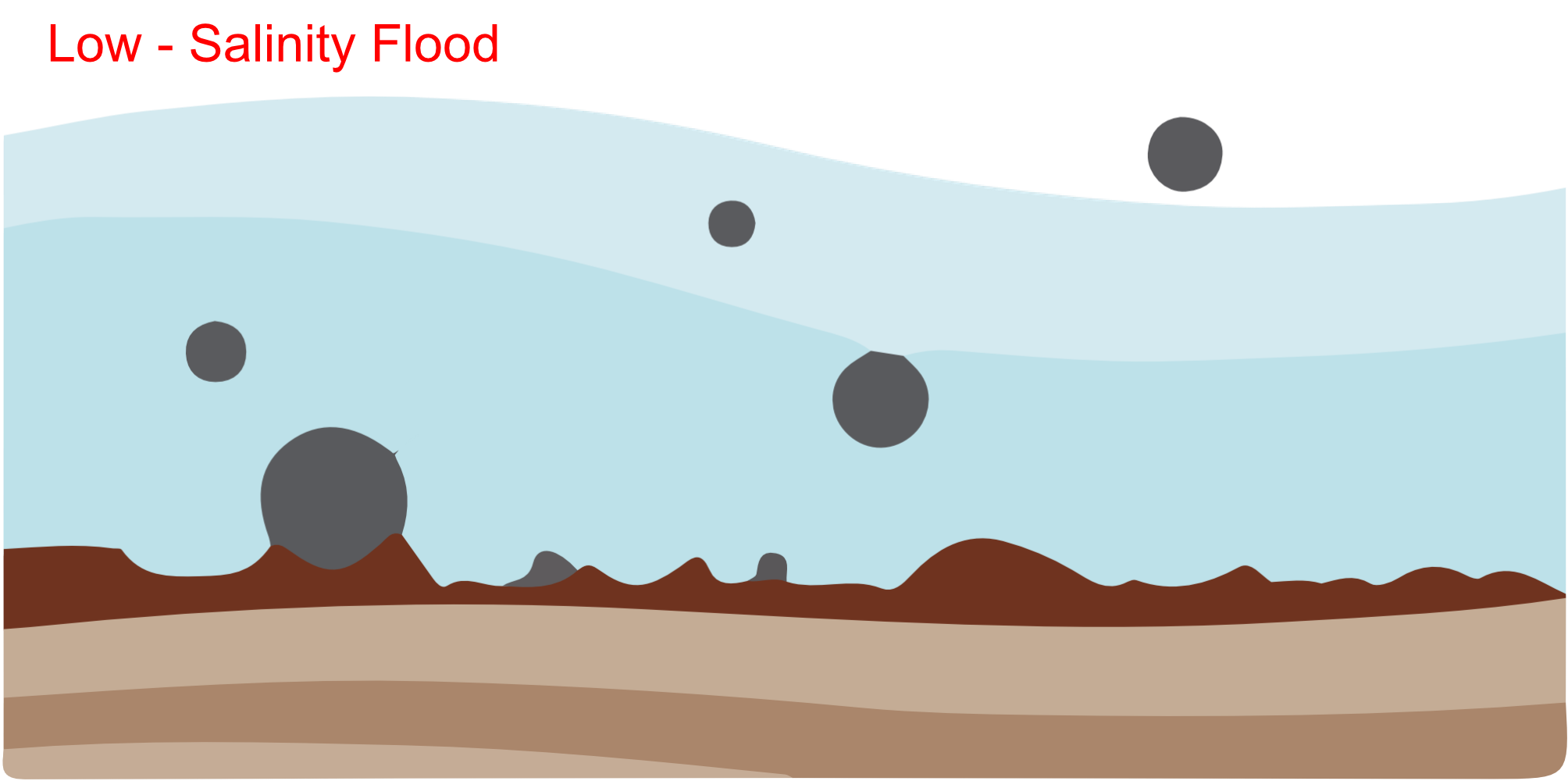
Research Questions
Low-salinity EOR works, but the fundamental mechanisms are not well understood.
- Can simulations help to improve our understanding of low-salinity EOR?
- Can we calculate the energy required to release an oil molecule from a mineral surface?
- Can our results help increase future oil extraction rates?
My work...
- MD simulations...
Sweeping study of various model oil compounds on various clay minerals at various salt concentrations...
Basic MD Setup

Basic MD Setup
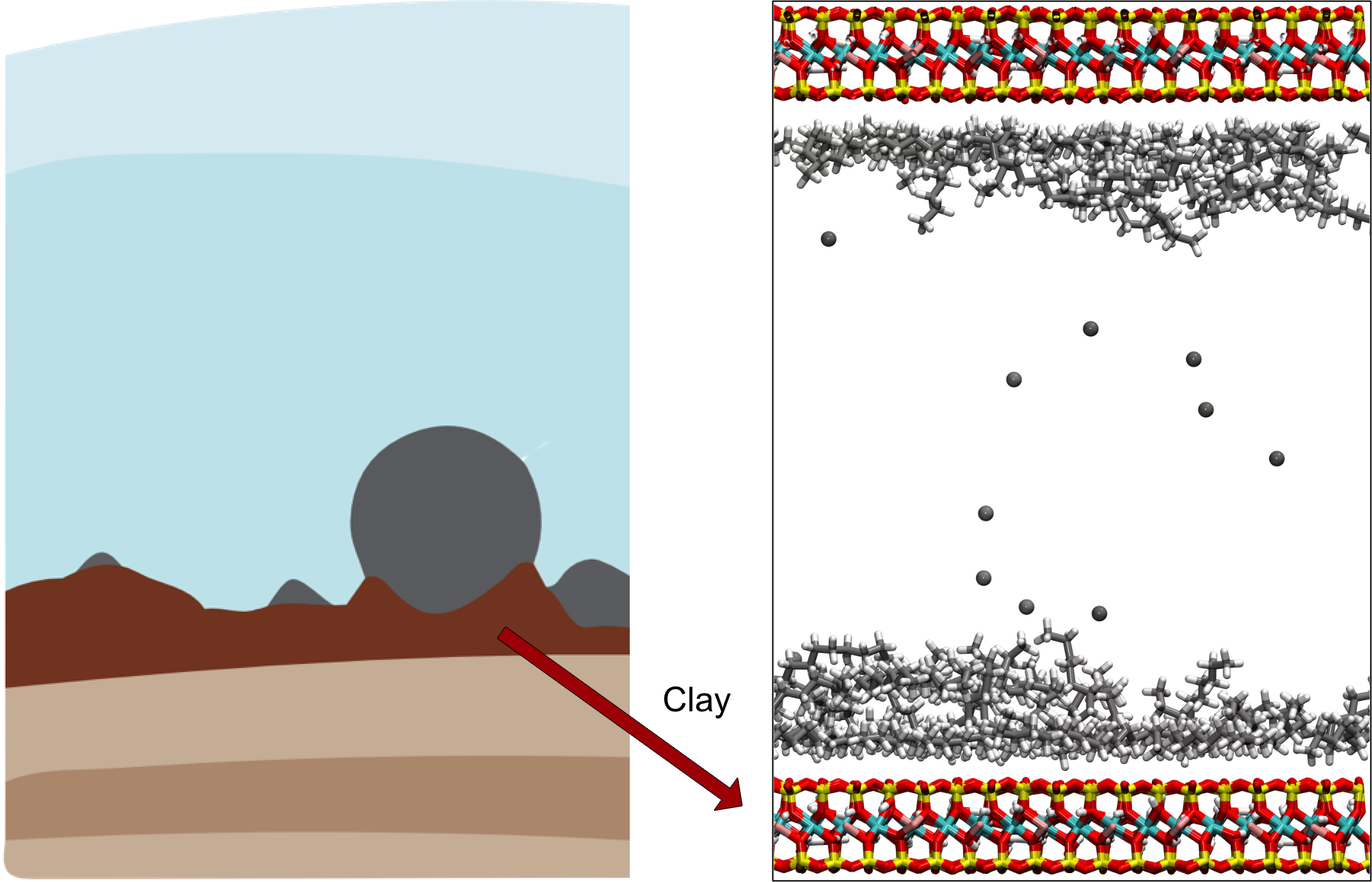
Basic MD Setup
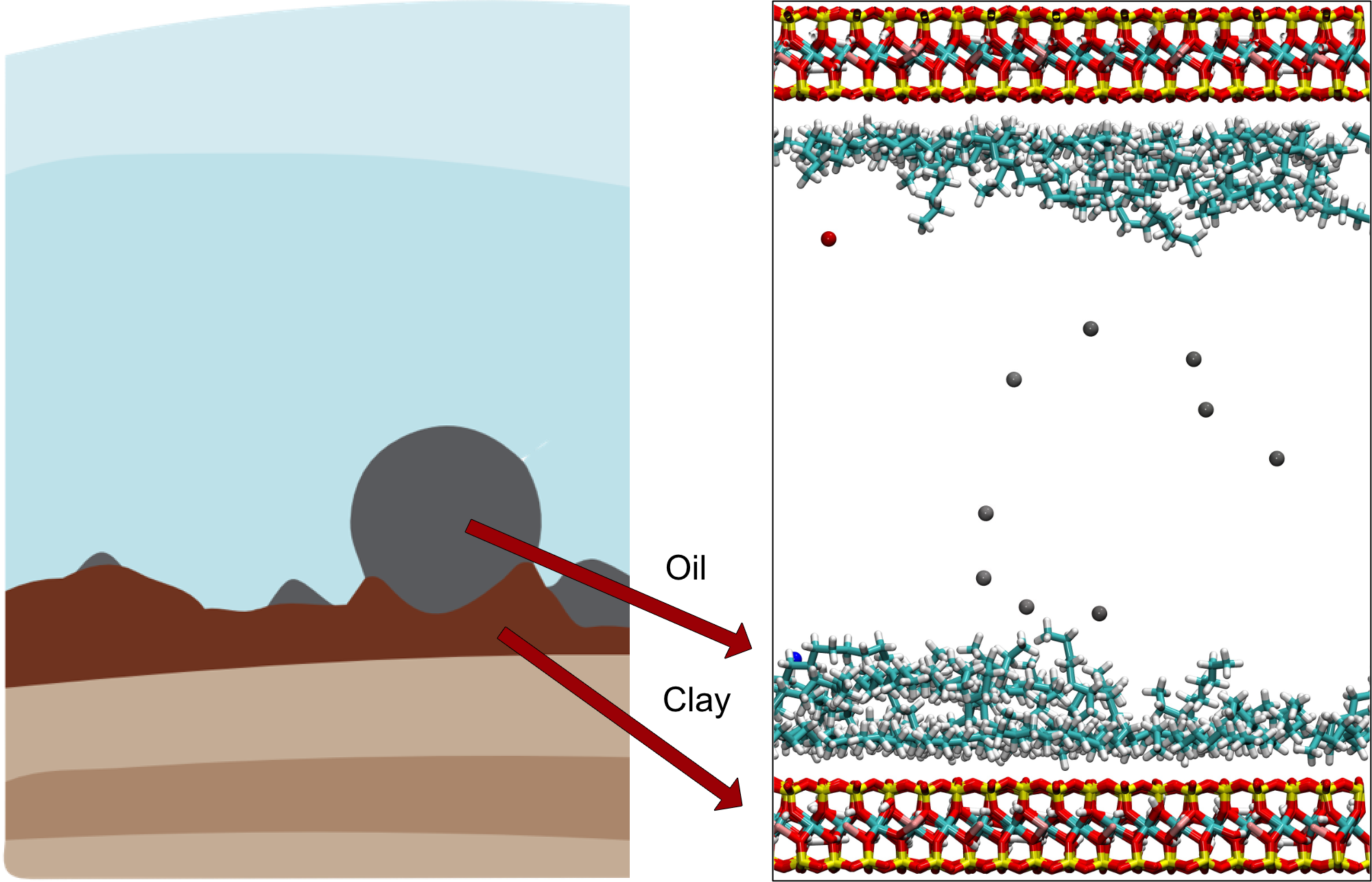
Basic MD Setup
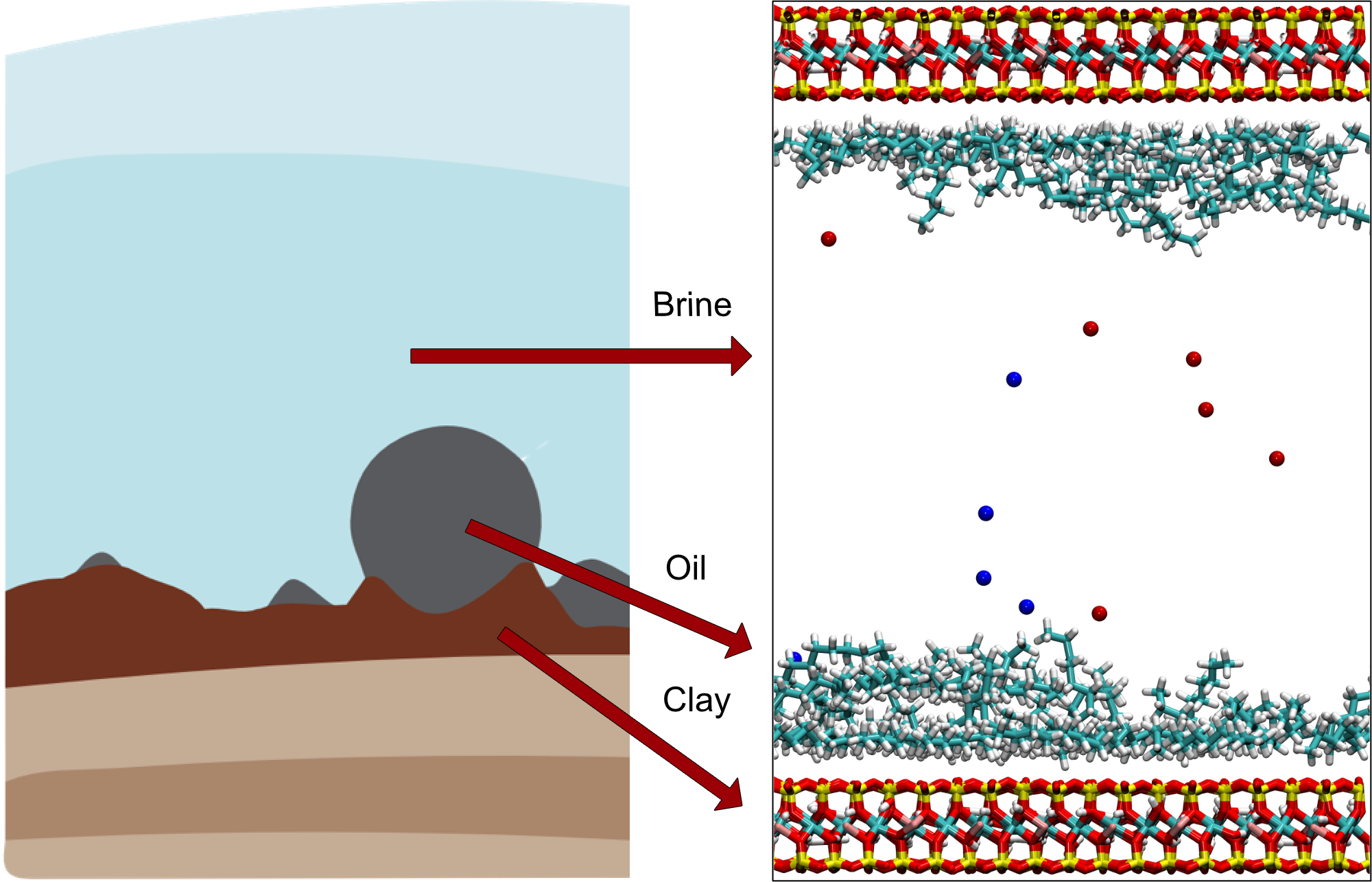
MD Results
My work...
- MD simulations...
- Free energy calculations...
Sweeping study of various model oil compounds on various clay minerals at various salt concentrations...
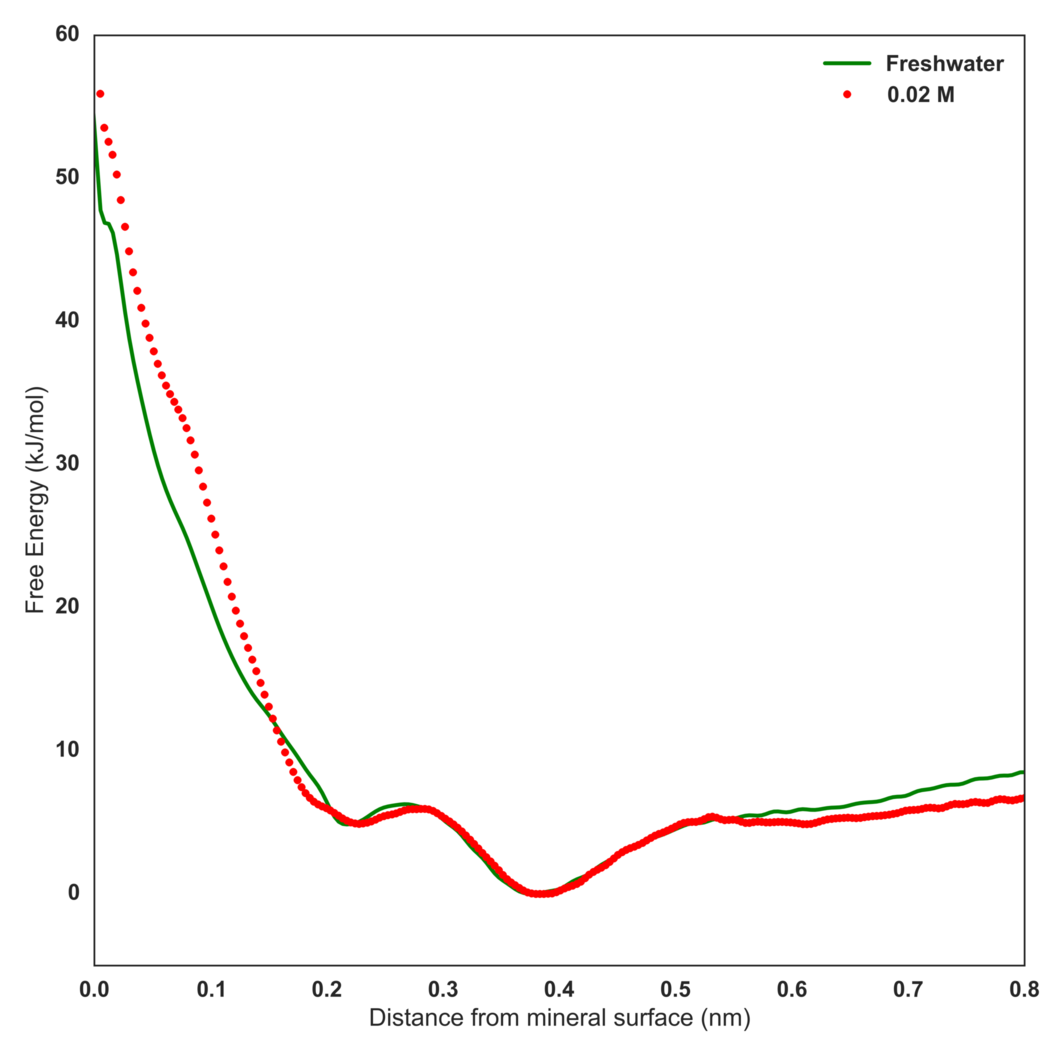
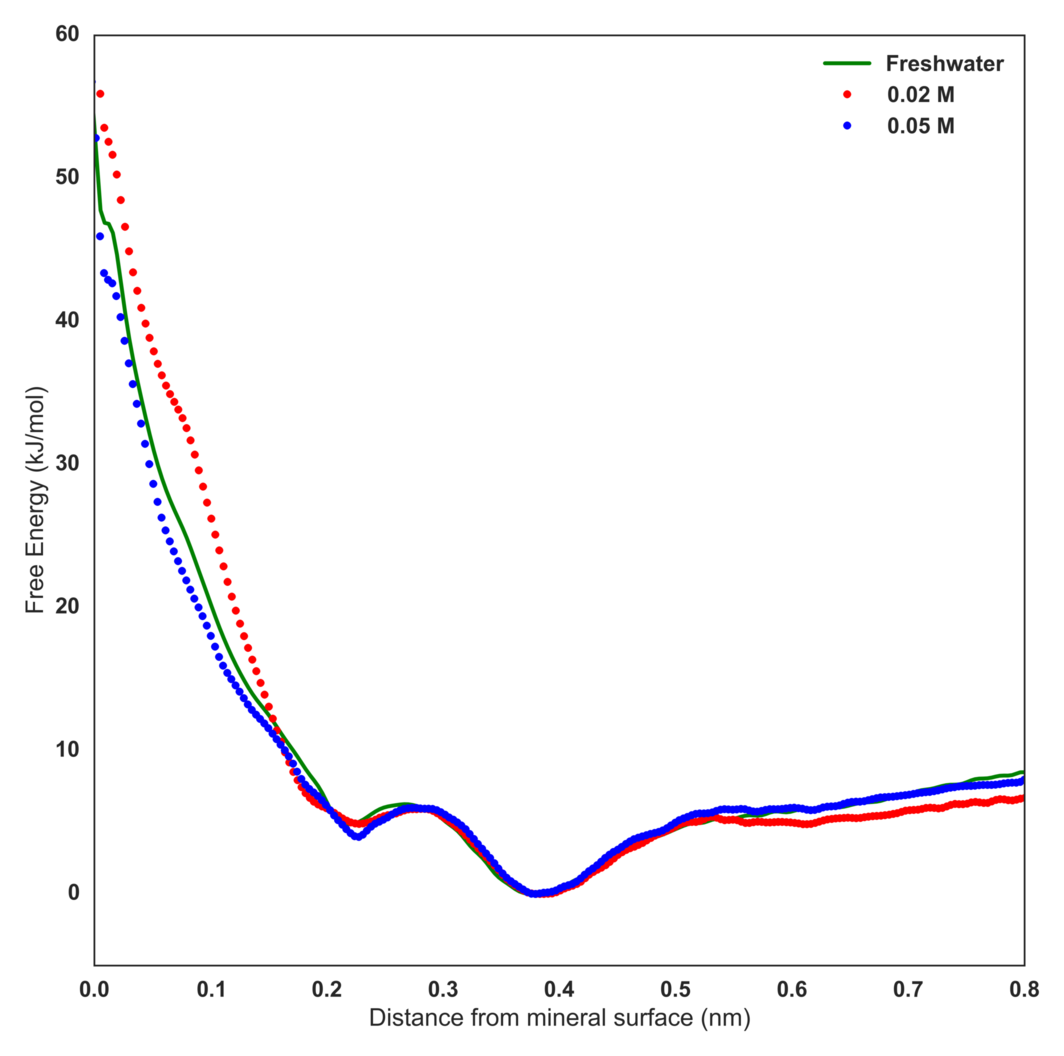
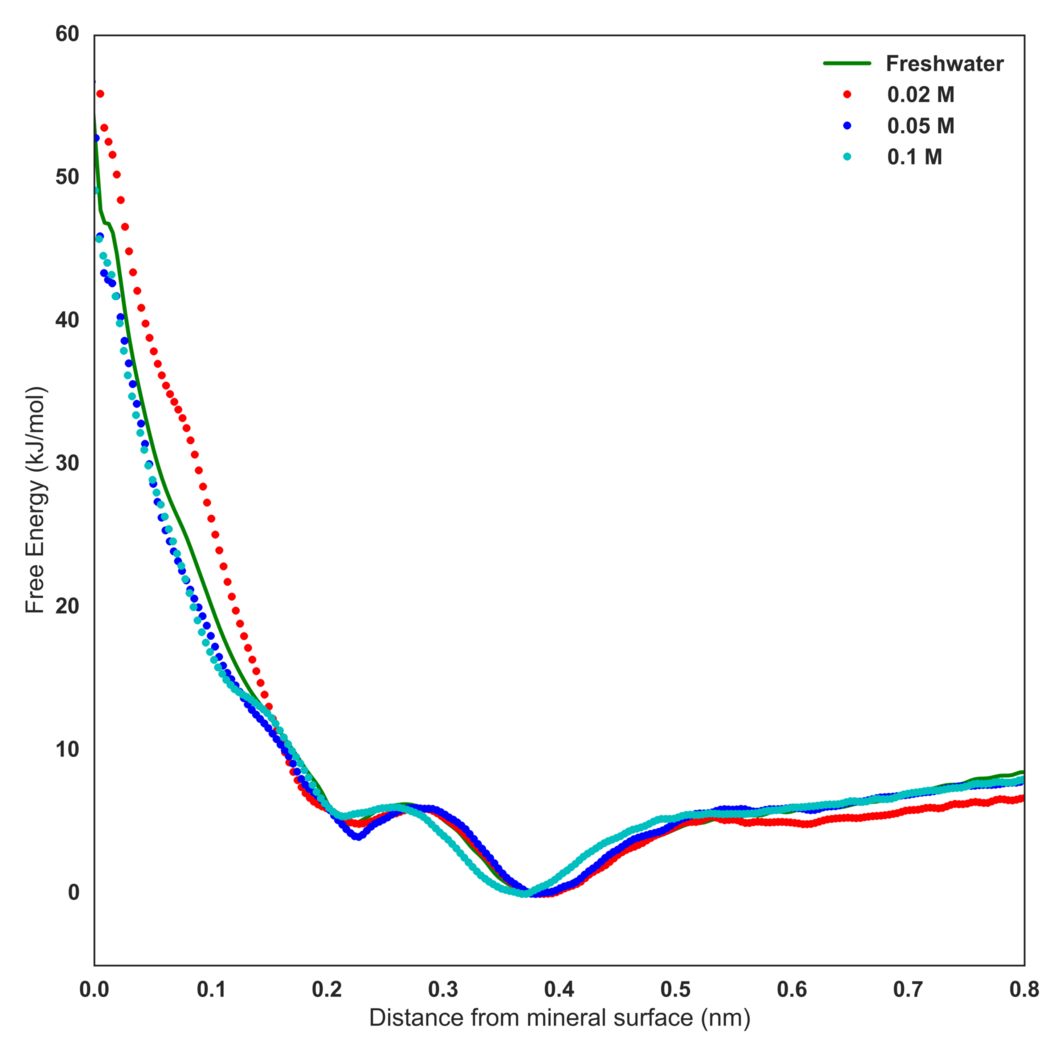
Adsorption energy of simple salt ions (NaCl) on clay mineral surfaces.
The effect of salt concentration.
Metadynamics 101
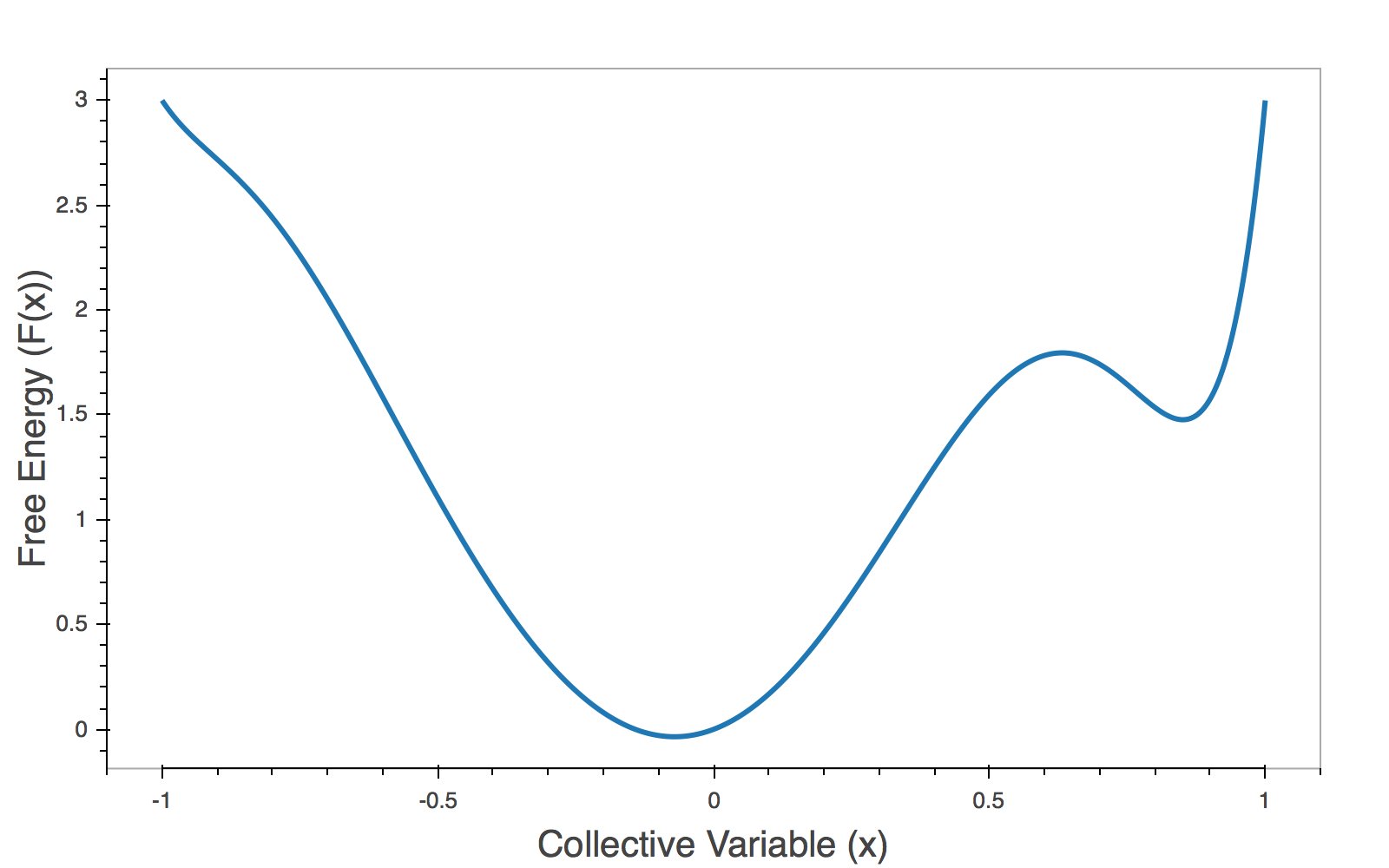
Metadynamics 101
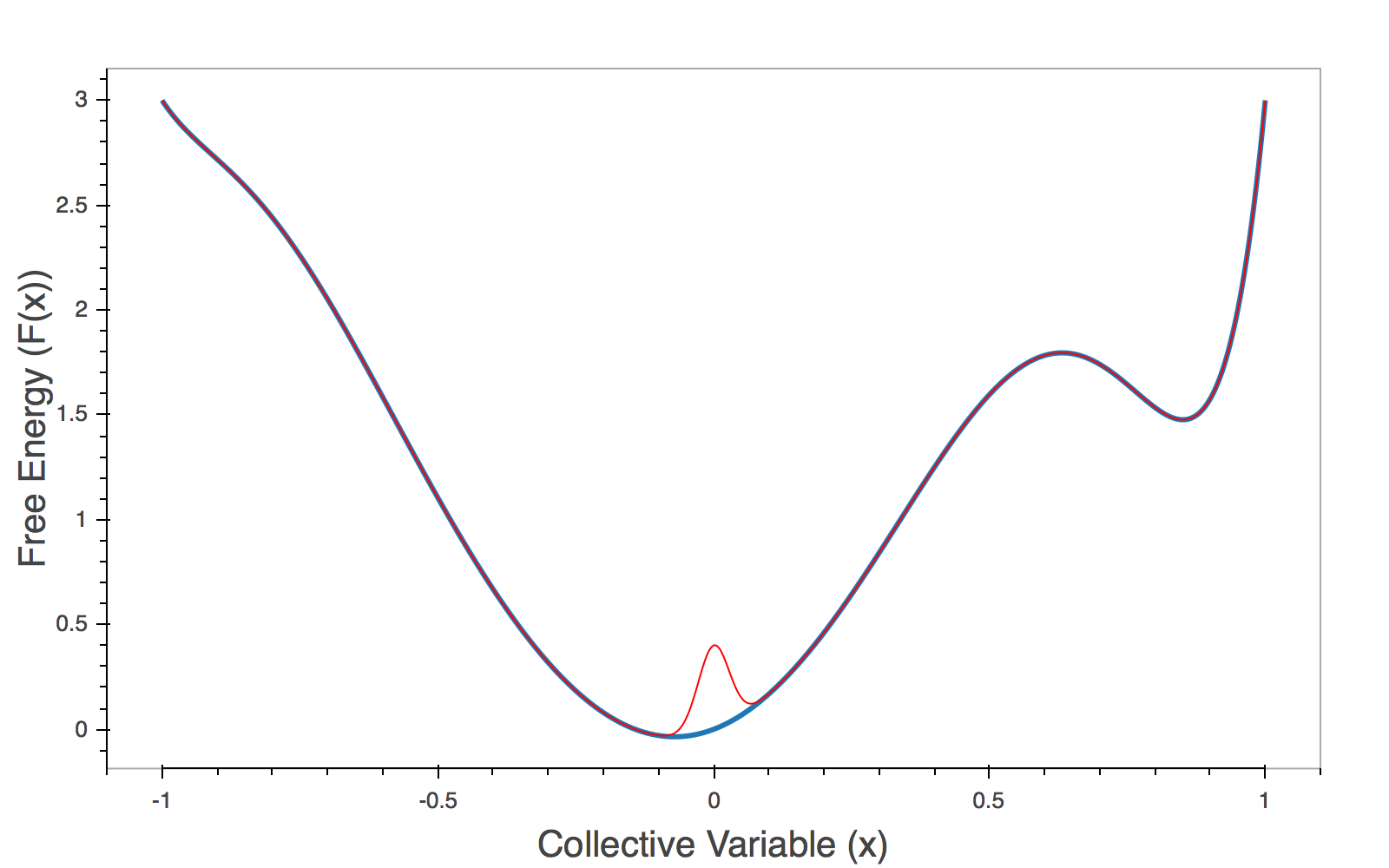
Metadynamics 101
Metadynamics 101
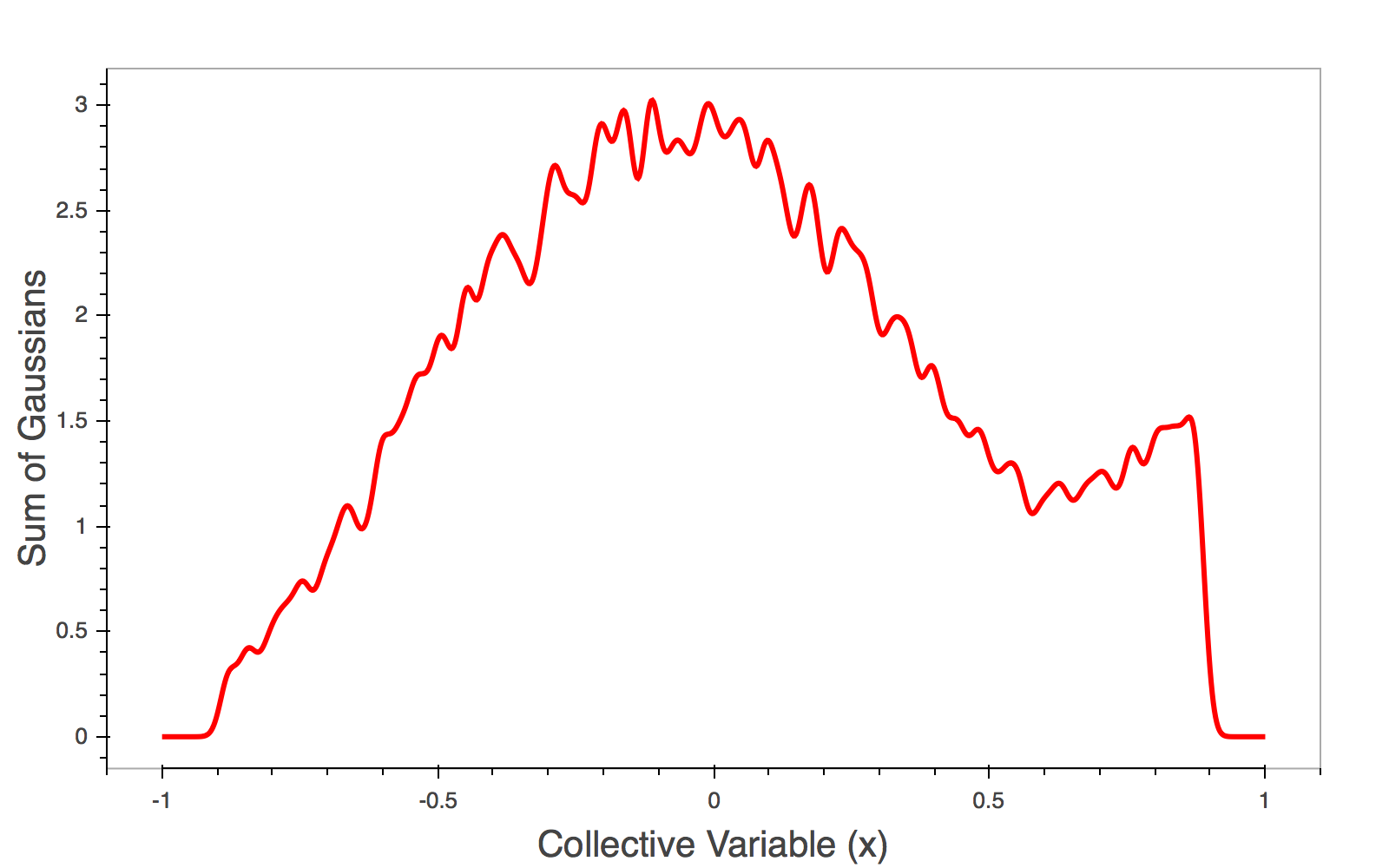
Metadynamics 101
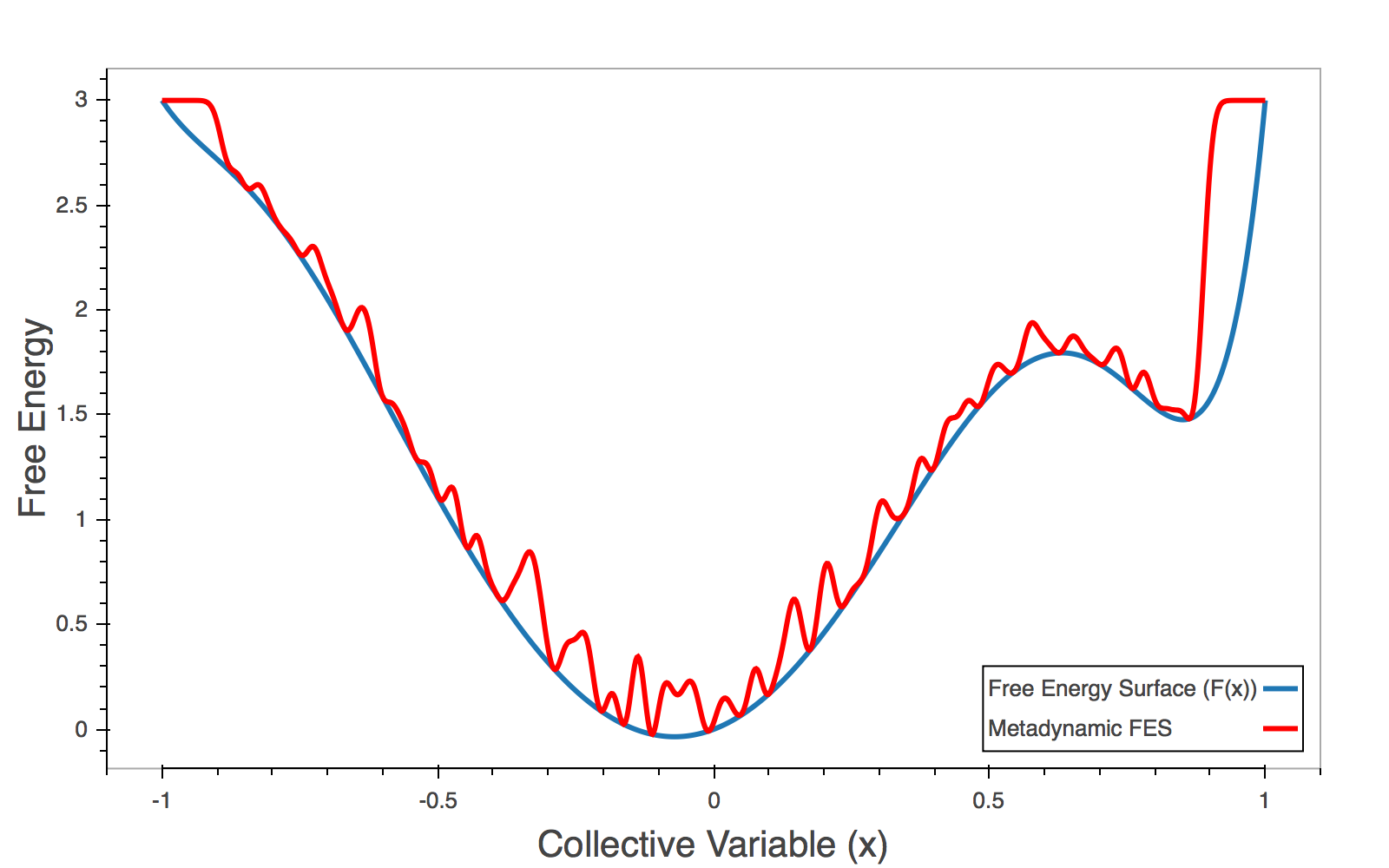
Metadynamic Setup
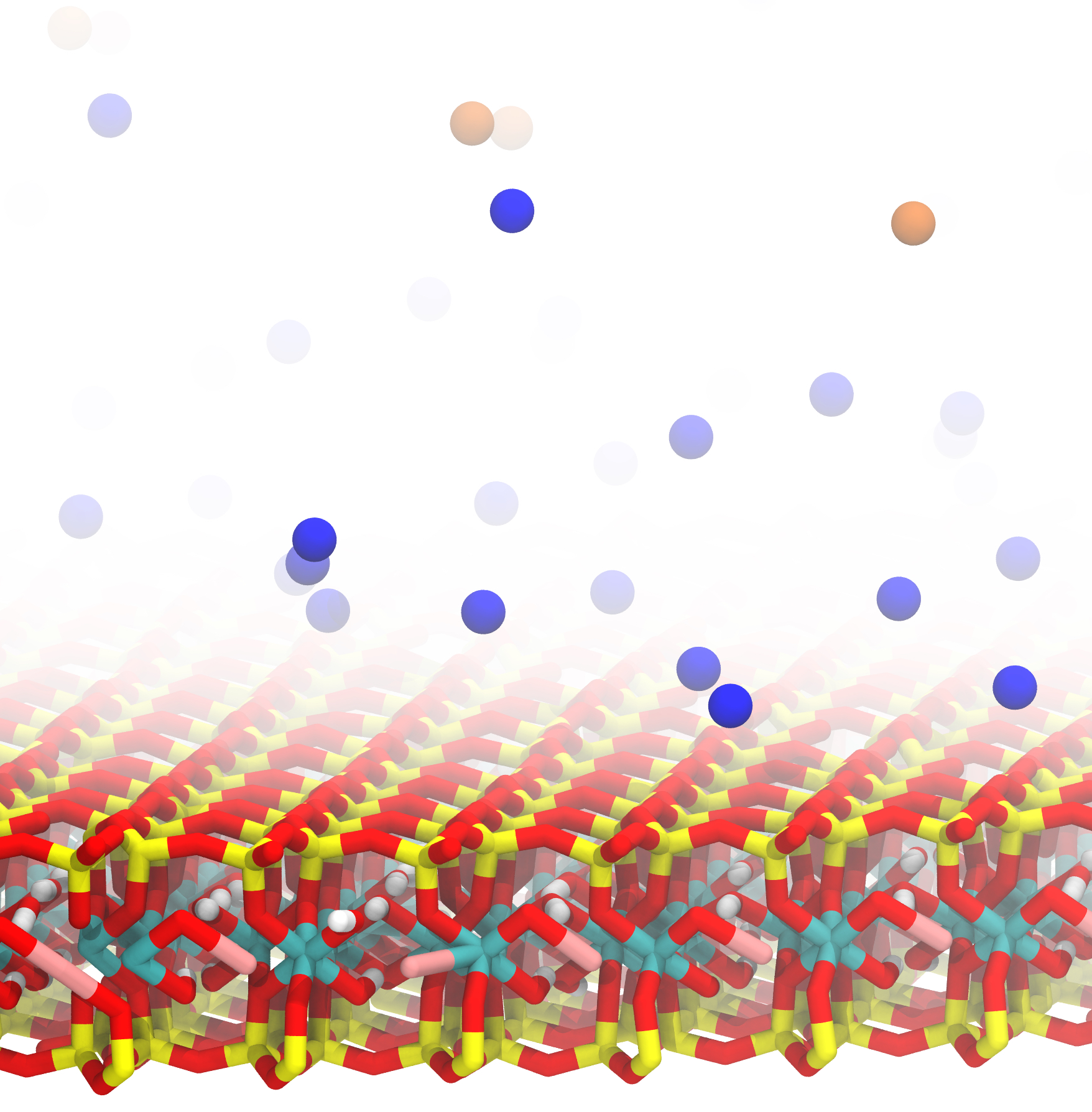
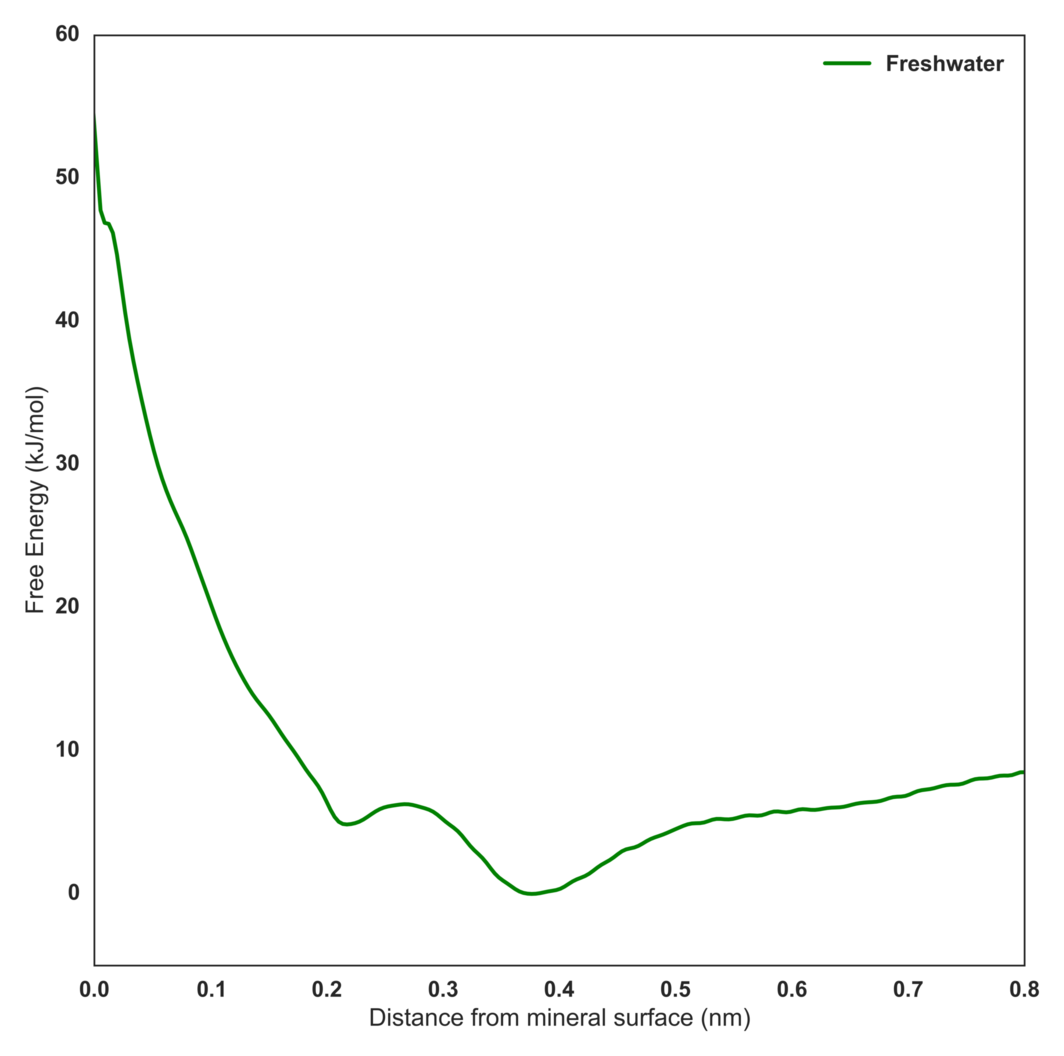
My collective variable is the distance between a test sodium ion and the plane of the clay mineral.
The test ion is constrained within one repeat unit cell of the clay mineral.
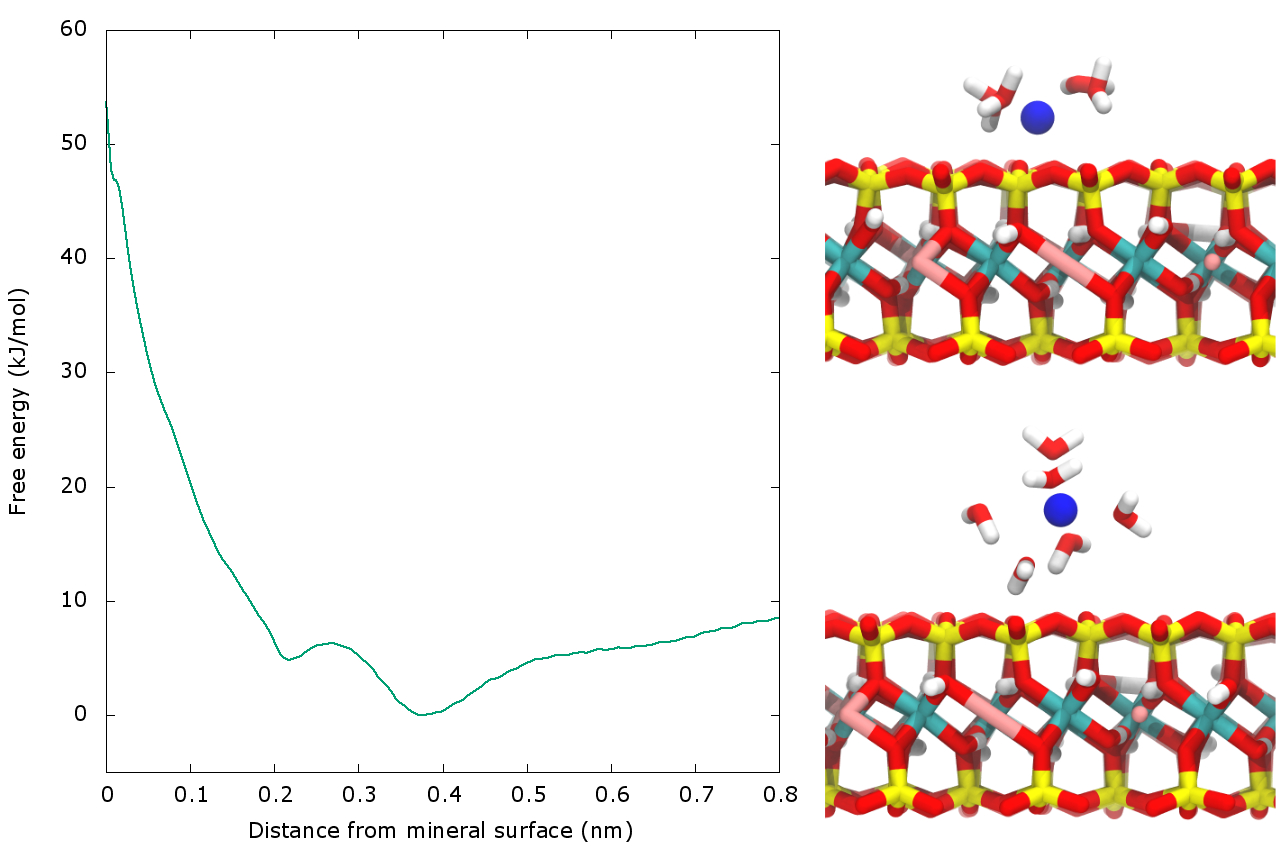
Metadynamic Results
What's going on?
And what about salinity?
And what about salinity?
And what about salinity?
And what about salinity?
And what about salinity?
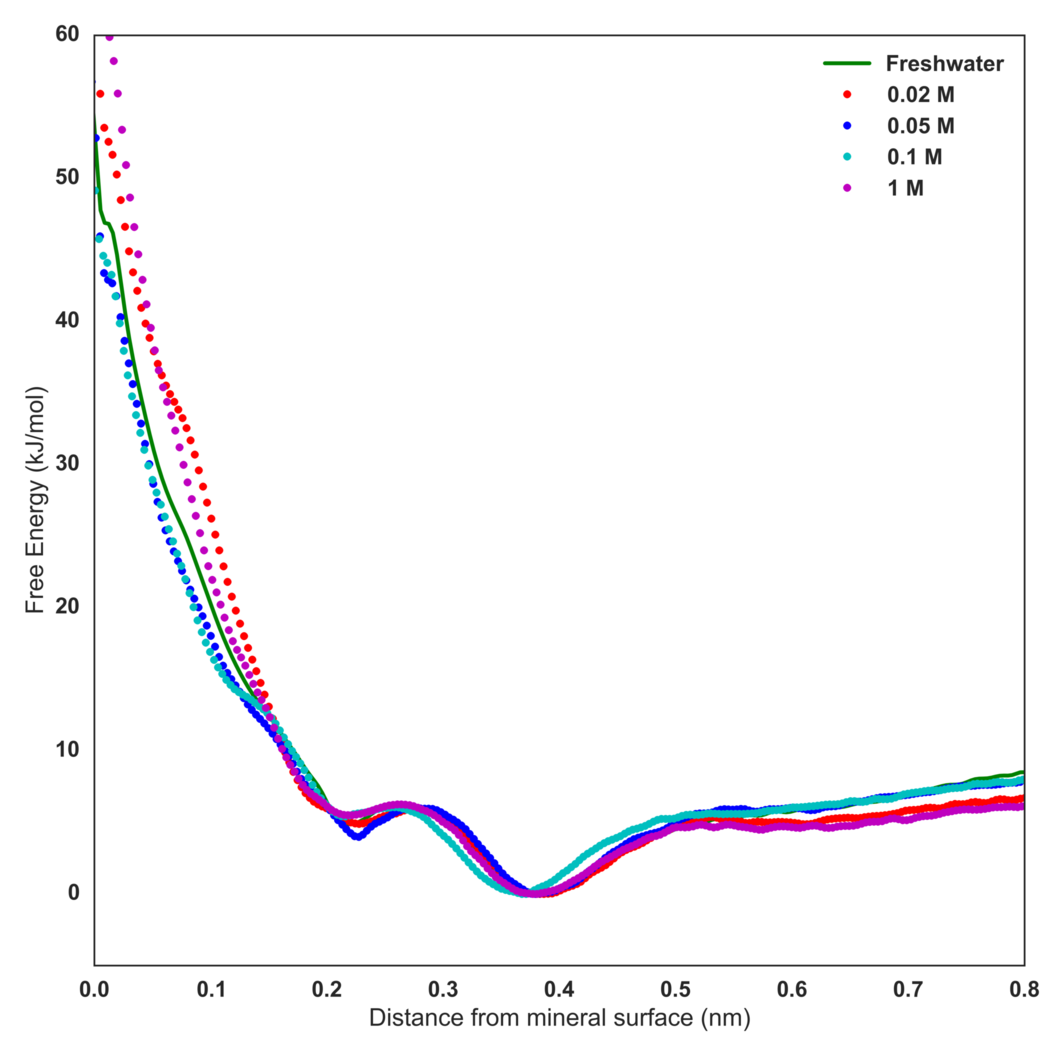
End of the road?
...not quite...
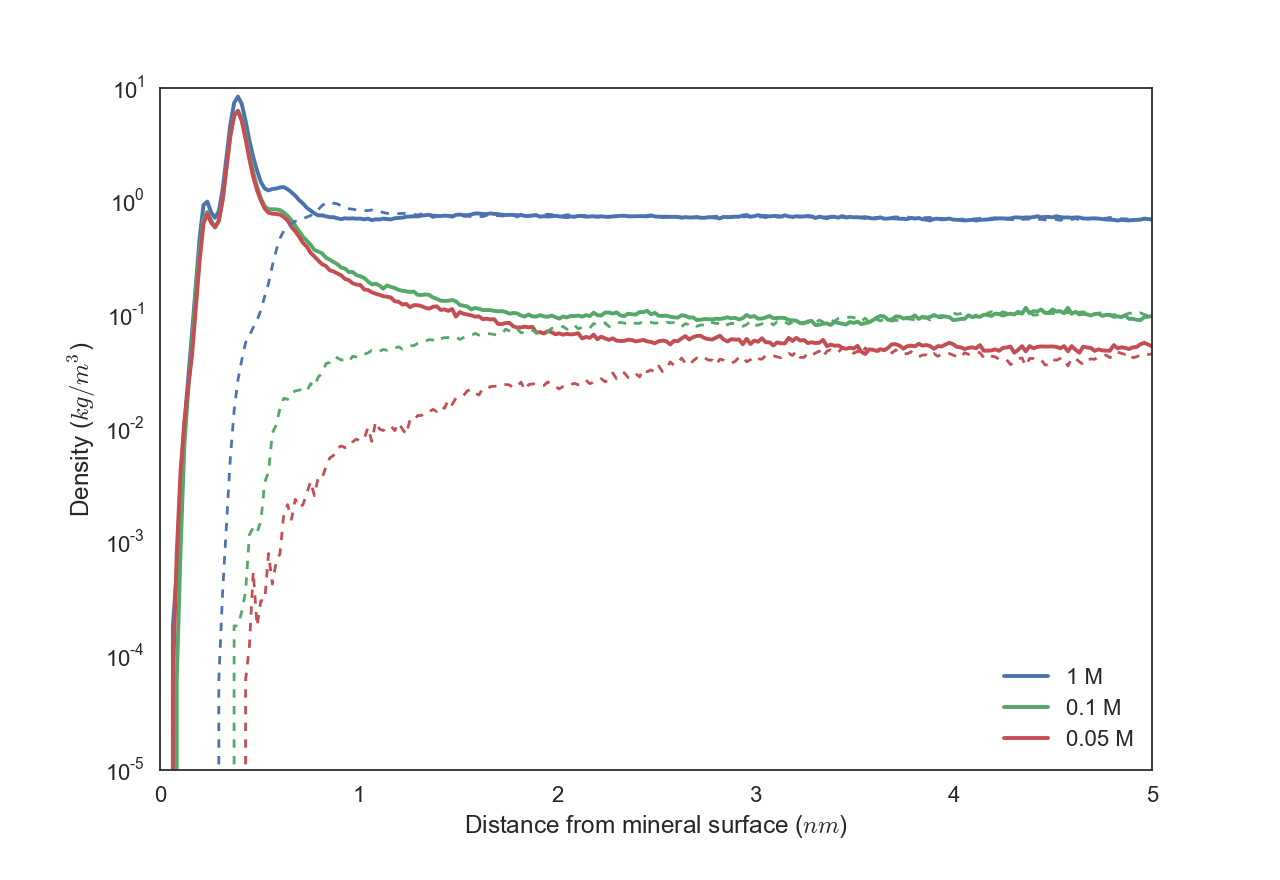
Conclusions
- The low-salinity effect with oil droplets is not initially apparent.
- Short range interactions ($<1$ $nm$) of ions and clays are not dependent on salt concentration.
- Longer range ($>1$ $nm$) effects may be present.
Due to ion-ion and ion-clay dispersion forces.
Due to electric double layer expansion.
Future Work
- Can we probe the long-range effects of salt concentration?
- Can we run metadynamic calculations on oil organics?
- What degree's of freedom are important?